Tsuga Beadwork
Angelite Drape Code Necklace
Angelite Drape Code Necklace
Couldn't load pickup availability
Angelite is anhydrite: calcium sulfate that has lost its water over millions of years of geological compression. The blue-gray color is the mineral itself, not a treatment. Most commercial angelite comes from Peru, where deposits form in evaporite sequences left by ancient inland seas. The stone is relatively soft, which is why it cuts well into the matte rounds and cubes you see across these rows. No high polish. The surface absorbs light rather than throwing it.
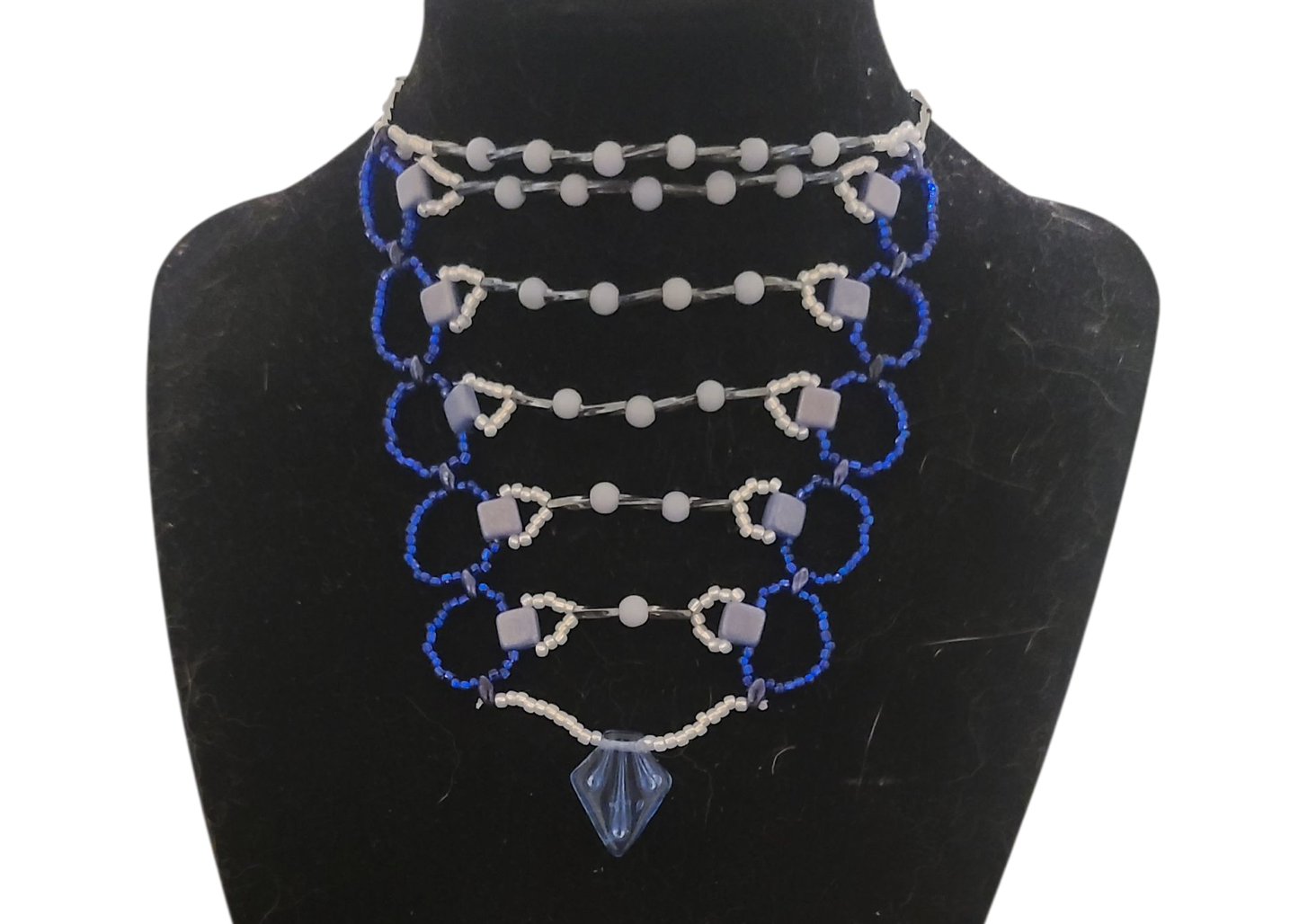
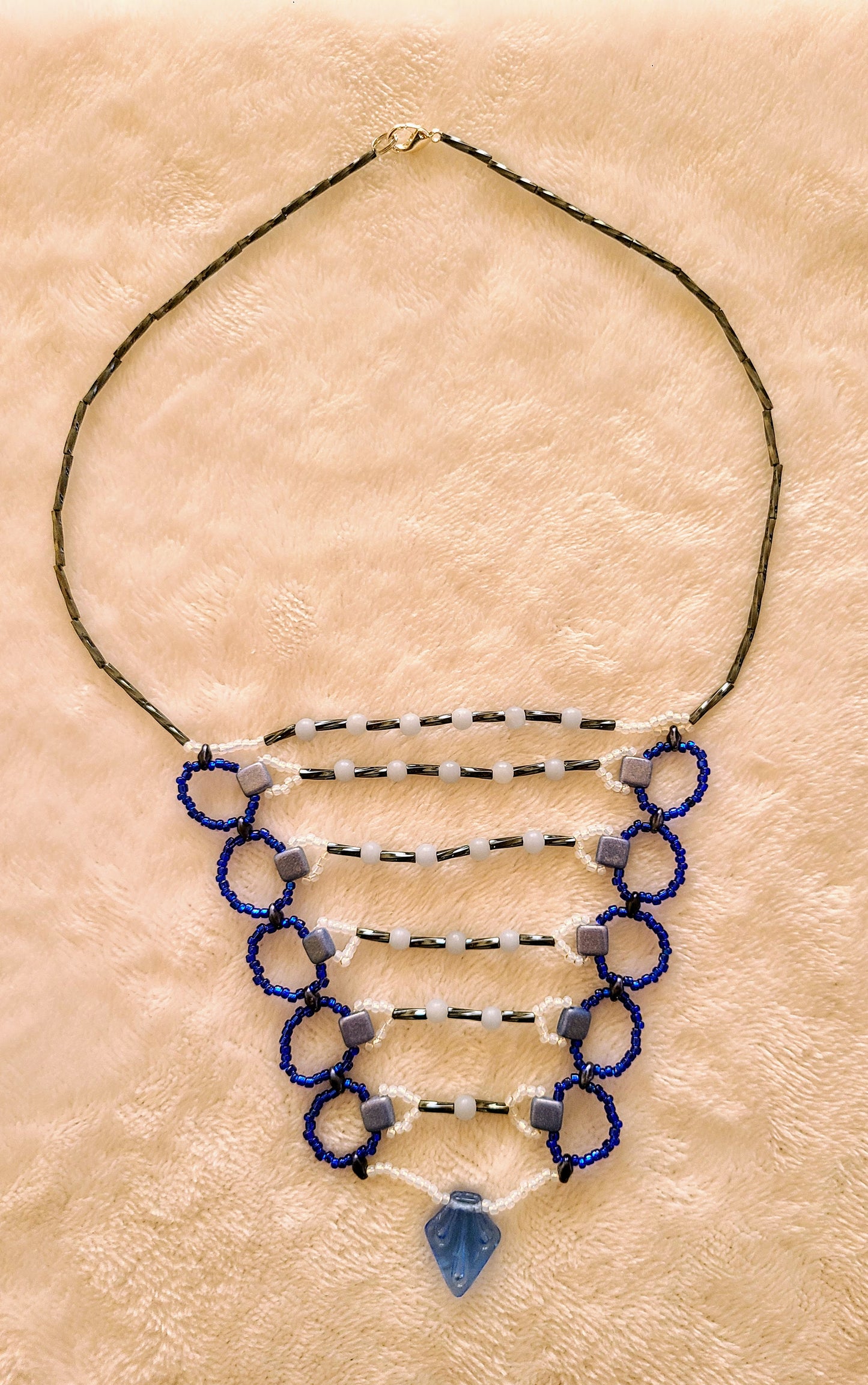
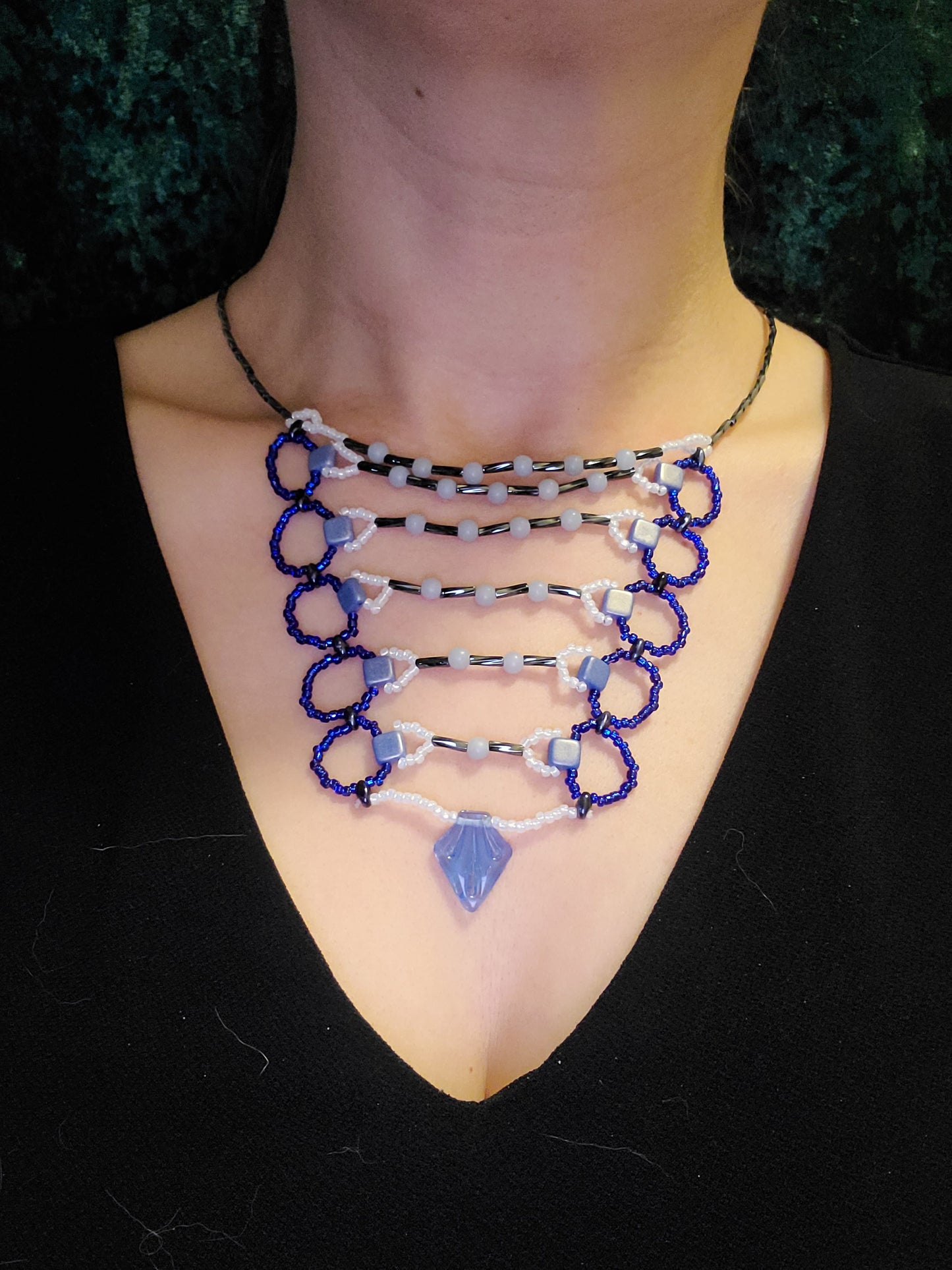
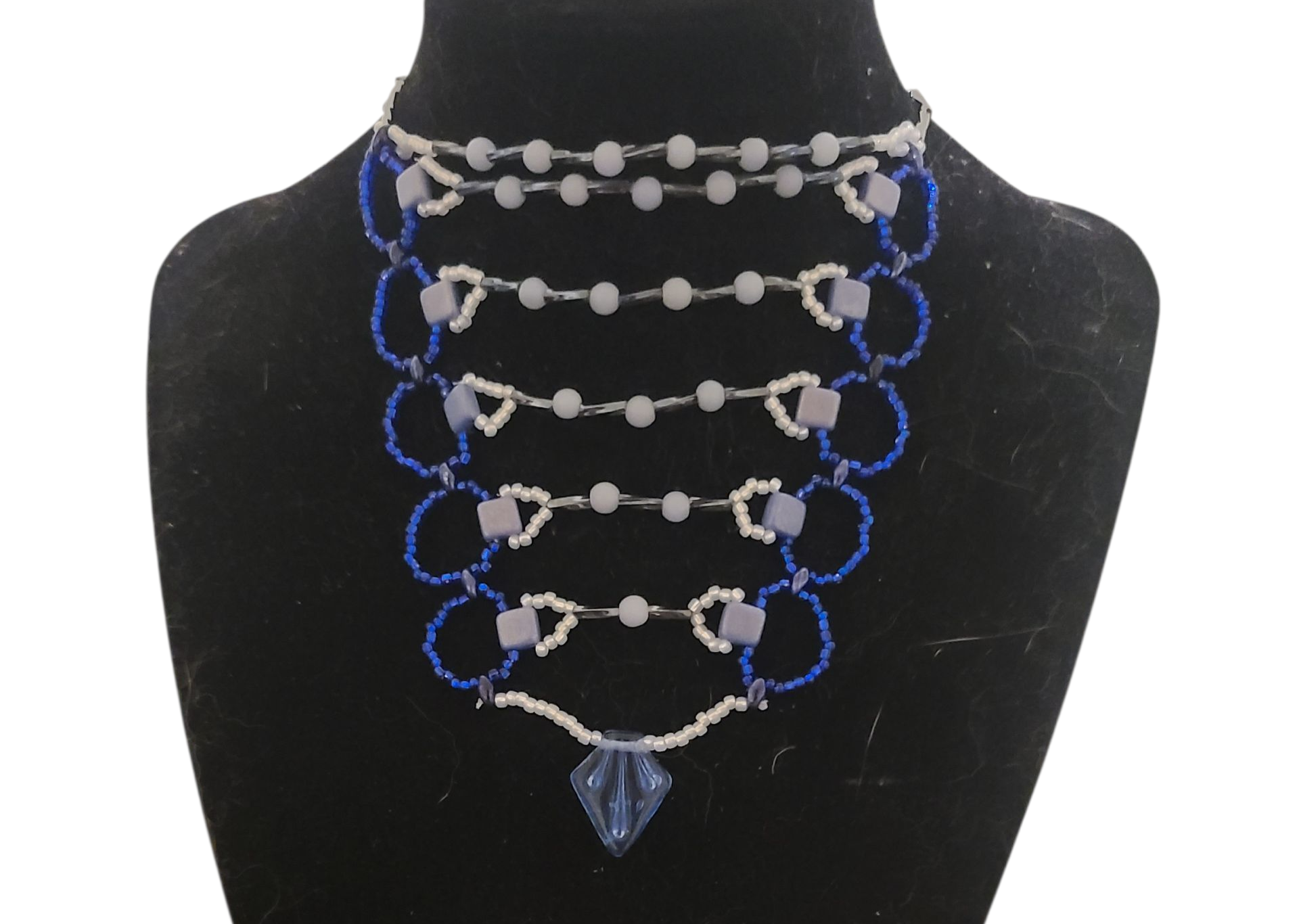
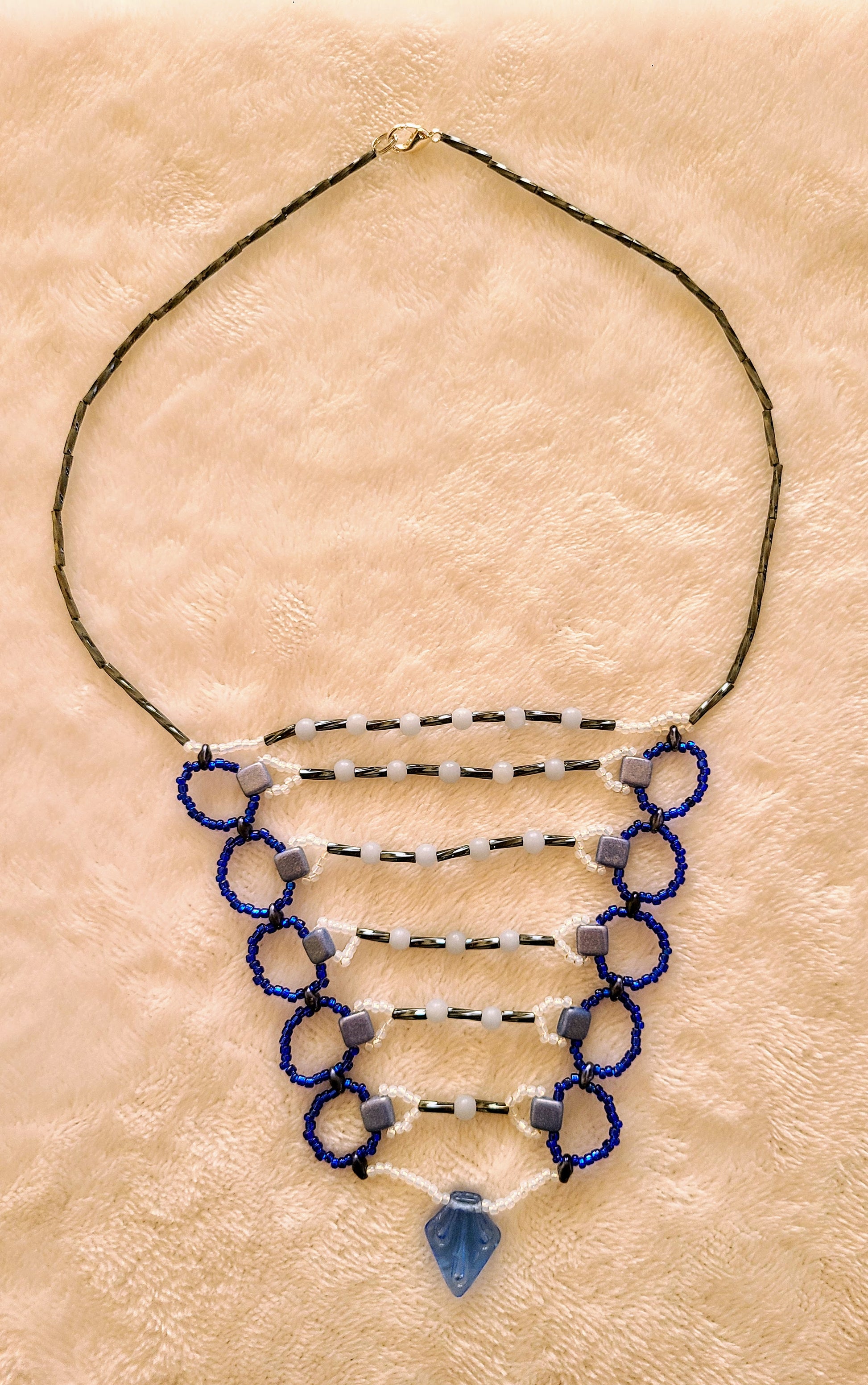
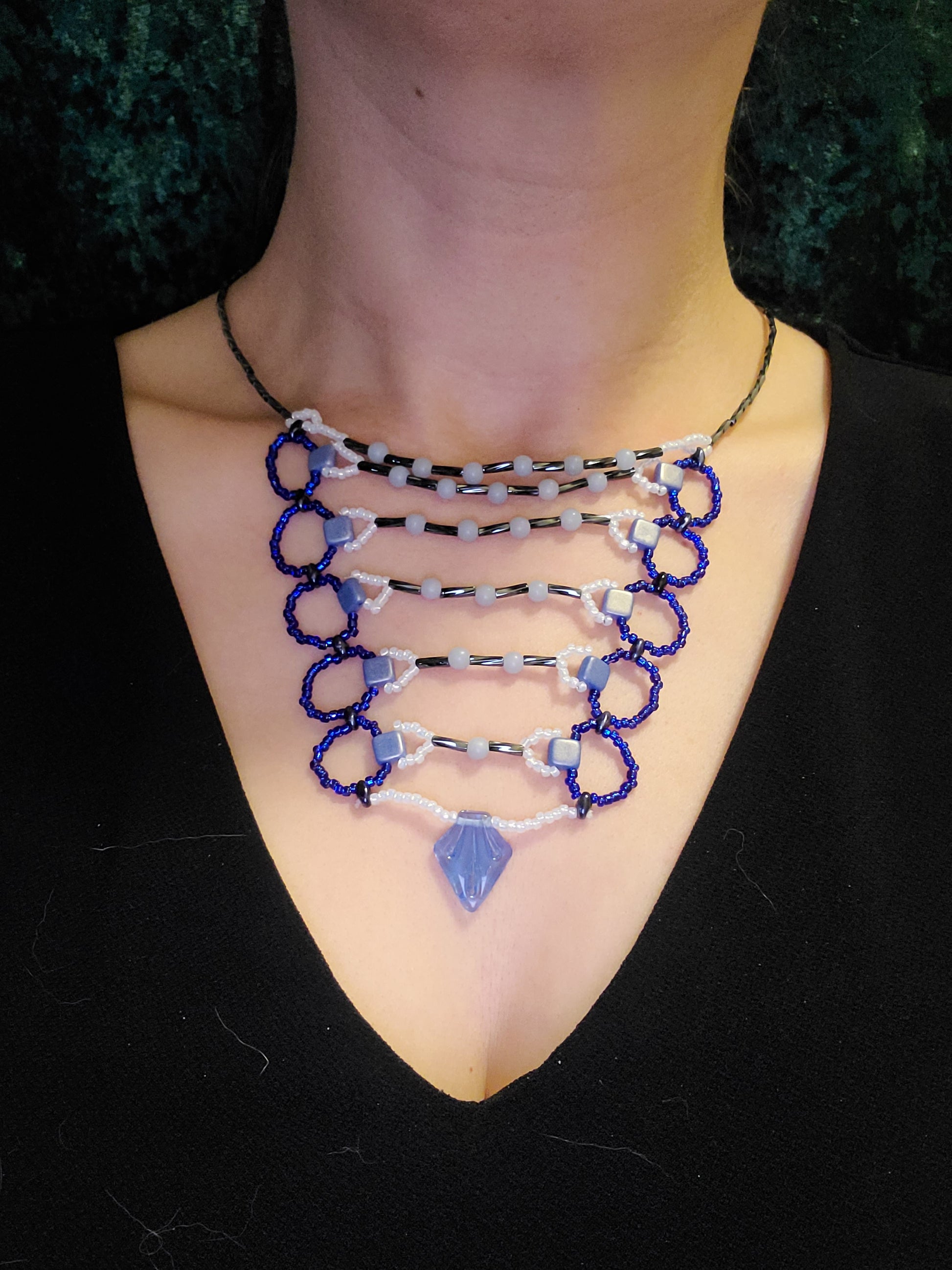
The structure is six horizontal rows of angelite, alternating matte rounds and cubes, strung on a clear monofilament that disappears against the skin. Cobalt blue seed bead loops anchor each row on either side, pulling the whole bib into a descending inverted triangle. The loops are load-bearing. They are also what gives the piece its diagrammatic quality — the negative space between rows reads as deliberately as the stones themselves. White seed beads form small triangular trusses at each anchor point, distributing tension across the width of the bib.
The bottom point terminates in a faceted pale blue glass fan drop. The faceting catches light differently than the matte angelite above it — one surface absorbs, one refracts. That contrast is structural punctuation.
Wear it with a chambray shirt, a crisp white linen tunic, or a navy silk top. For long lunches, museum days, or any day you want quiet architecture.
Construction
- Bib necklace, six horizontal rows, inverted triangle silhouette
- Angelite (anhydrite, calcium sulfate), matte rounds and cubes, sourced from Peruvian evaporite deposits
- Clear monofilament, recedes against skin
- Anchoring loops: Cobalt blue seed beads, load-bearing, structural negative space
- White seed bead triangular forms at each anchor point
- Terminal drop: Faceted pale blue glass fan pendant, refractive finish
- Closure: Lobster claw clasp closure